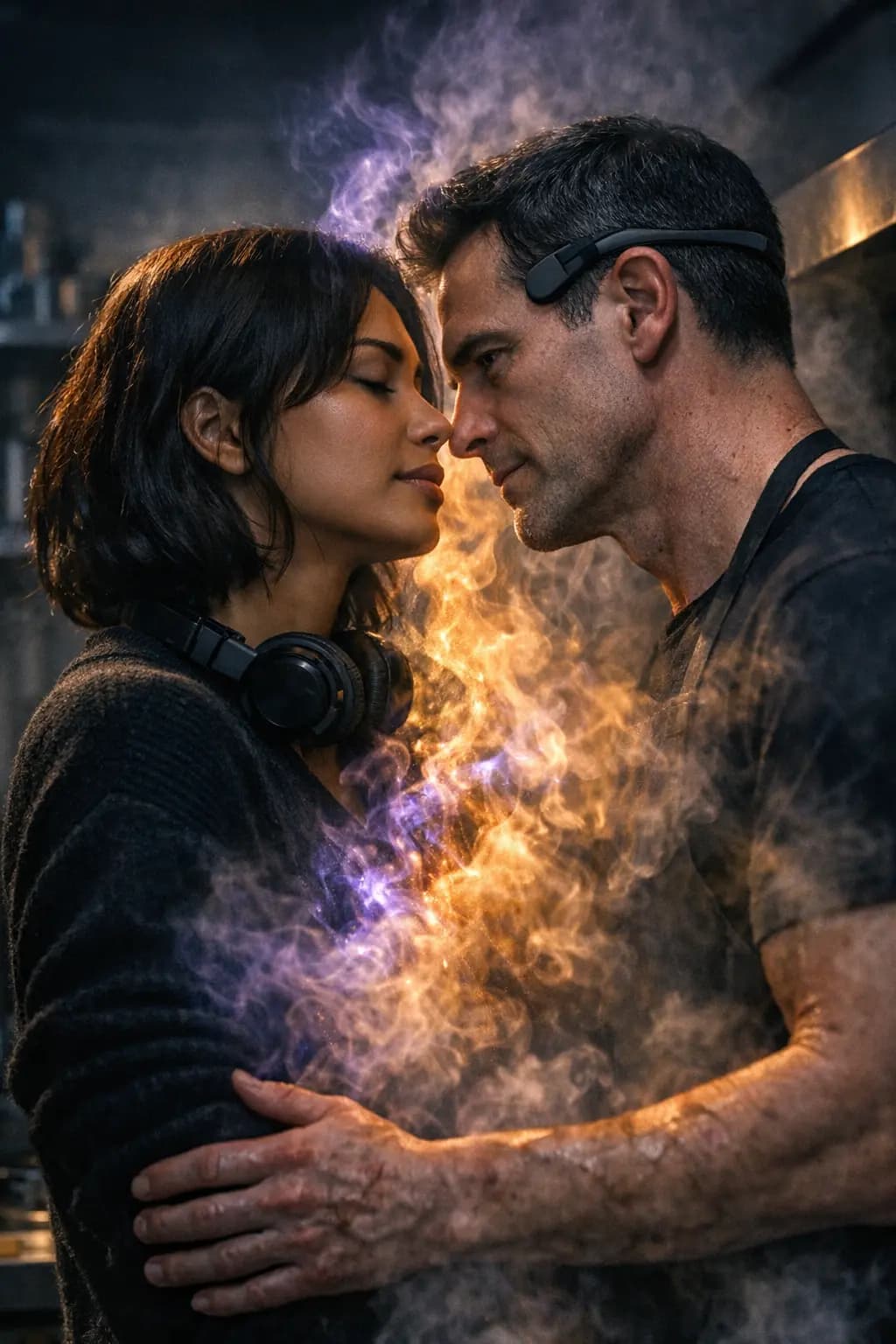
What Remains?
33.2K likes54.4K reads
I lost the second-to-last note of my sense of smell on a Tuesday morning eight months ago, drinking coffee at my own kitchen table.
Mine had been thinning for six weeks by then. A garlic clove that softened on a Sunday. The rain that went odorless on a Wednesday. The page I tore out of my notebook on a Friday, which used to smell like notebook and that morning smelled only like the absence of it. I logged each one. I am, by training and temperament, a person who logs things.
Six weeks of fade. Then on the Tuesday morning, the last bright note of coffee thinned to a flat shape behind glass. I sat with the cup against my mouth for an entire minute. I lowered the cup. Raised it once more.
Nothing.
The other ninety-three people whose case files I have read all describe the same instant: one second the world had smell, the next second it didn't. Asleep when it happened. Mid-conversation when it happened. Mid-shower. Mid-meal. Some of them sat up in bed with the wrong half of the world gone and waited for it to come back. It did not come back.
Mine took six weeks.
I have spent eight months trying to figure out why.
The audiograms on my desk were from a study Mira had started before the Toll, mapping high-frequency thresholds across age and gender. The dataset was clean. We had been planning to publish in the spring before the world stopped being able to explain what was happening to its own bodies, and the spring became a year ago, and now we were on the cusp of submitting a paper that was no longer about high-frequency thresholds. It was about case-load patterns. It was about correlations.
It was about, if you read between Mira's lines and mine, the thing nobody on earth was supposed to be able to study.
The light in the office at six in the evening had that particular Lindgren green to it. The fluorescents two doors down were buzzing in the way they buzzed when one of the tubes was nine days from failing. I had stopped flinching at the sound. I had stopped checking a calendar I no longer needed, because my own audiograms had been holding steady at baseline for three weeks. No new thinning. No new loss. Stable.
Three weeks since the last shift. The longest stretch of stability I had recorded since the smell-loss.
The data was clean.
The data was clean and I was the only person in the building who knew what shape it actually made.
A knock at the door, and Mira walked in without waiting. She had her green cardigan on, which meant she had been at the institute since before anyone else, and the small bowl of clementines that lived on her desk was sitting on her desk, which meant she had not been to her own office yet. She set a printout on my keyboard.
"Submission timeline," she said. "Seven weeks, draft to me. Nine, draft to journal."
"Mira."
"I know. Read it." She looked at the audiograms, then at me. "Are you going to be in the country for the holidays?"
"Yes."
"Good. Read the timeline. Push back if you have to. But read it." She turned at the door. "Two years of data and the world still wants to blame coffee. Let's give them something better than coffee."
She was gone before I had a sentence.
The corridor at Lindgren is one of the two longest interior hallways on the eastern seaboard. I had read this in a maintenance bulletin years ago. It is the kind of fact that lives in the back of your head and offers itself when nothing else will.
I was walking it at six-fifteen, on my way to the cafeteria for the last hour of soup, when I saw him.
He was standing at the far end of the corridor. He was talking to someone I could not see, possibly Mira's project manager Saoirse, who had a habit of standing in the alcove by the elevator. He was nodding. He was wearing a charcoal cardigan over a soft button-down. The light caught the right side of his face, and a single grey strand at his temple did the thing grey strands do in fluorescent light, which is to look brighter than it is.
He tilted his head.
He tilted it the way someone who is listening hard tilts their head when the sound they are trying to catch is on a thinner channel than the room. Not bad hearing. Not aging hearing. The other thing. The recognizable thing.
I knew that tilt. I had learned it during the six weeks. People who are losing a sense have tells. The set of the shoulders. The half-second after a sentence where they confirm the sentence's outline before responding. The lean of the head toward the source.
I had been wearing my own tells for eight months.
He turned then, said something to whoever I could not see, and looked up.
He looked up at the same moment I looked down the corridor.
Dark brown, slightly downturned at the outer corners. The look of a person who has been listening hard and the room has just gotten quiet enough to look up.
He nodded. Once. Slow.
Then he kept walking, and so did I, in the opposite direction, and the corridor between us grew the way corridors grow in this building when you are carrying something you cannot put down.
I did not get soup.
I went back to my office and stood at the window with the lights off and watched the small congregation in the plaza outside the front doors. White ribbons. Maybe twelve people. They had been allowed by the building staff to put up a small folding table with literature on it, on the grounds that literature was protected speech and the table was outside the building line. The literature was uniform. WHAT THE TOLL TAKES. WHAT REMAINS. FIVE FOR FIVE, FIVE FOR SURVIVAL.
The Preservers were polite. The Preservers were also wrong about almost everything.
I watched a woman in white wool refold a stack of pamphlets. I watched a man in a high-visibility vest direct a single pedestrian around the table. I watched the autumn light go horizontal and the windows of the building across the plaza turn briefly into copper.
The man with the tilt was an acoustic engineer. I knew this because Mira had told me last week that she had brought one in for the protocol, that he had built two of the soundproofed listening rooms in the basement, that his name was Eliot Vahn and that we would meet him at the kickoff next Monday. That I would like him. That she would not have hired him if she did not think I would like him, although she had not put it that way. She had put it: He listens like you listen. He'll work.
Mira had not mentioned that he was losing his hearing.
I picked up my phone and opened the calendar and scheduled my next audiogram for Friday morning.
I looked at the date a long time.
I looked at the cup on my desk that had been black coffee at noon and was, at six-thirty in the evening, still black coffee, because what I had stopped doing eight months ago was lifting it to my face on the way to my mouth. I had stopped doing that the third time I had caught myself doing it after the smell was gone, because there are so many ways to inhabit a habit, and after a while you can teach yourself most of them out.
I had not stopped logging things.
I opened the notebook on my desk and wrote, in the careful handwriting that was the only handwriting I had after thirty-three years of being told my handwriting was illegible.
> Day 244. Three weeks at baseline. Met E.V. in the corridor. He tilts the way a person tilts when a frequency is going. Started fourteen weeks ago, my guess, on the curve I would expect. Mine faded gradually. Everyone else's fades all at once. Why?
I closed the notebook.
Three weeks at baseline. Eight months and three weeks since the night Caleb had sat up next to me in the dark with the wrong half of the world gone, and I had sat up too, six weeks before mine would finish going, neither of us knowing yet what we had bought.
I closed the notebook.
I took the receipt from the corner of my desk where it had been waiting for me to do something with it, the receipt for the candles I had bought the week before the fade started, the candles I still kept on the bookshelf in my apartment because I could not bring myself to throw them out, and I tucked the receipt into the back of the notebook, and I put the notebook in my bag, and I picked up my coat.
The corridor was empty when I went back through it. The fluorescents two doors down were still buzzing.
In the parking lot I stood at the door of my car for a long time before I got in and drove home.